Humanity’s Report Card: How Do We Measure Up in the Eyes of AI?
An ordinary moment can reveal a much bigger story. From my home in Mediterranean Spain, I explore how global systems meet everyday life—and how culture gives those encounters meaning. A café conversation, a university classroom, a neighbourhood…
Introduction:
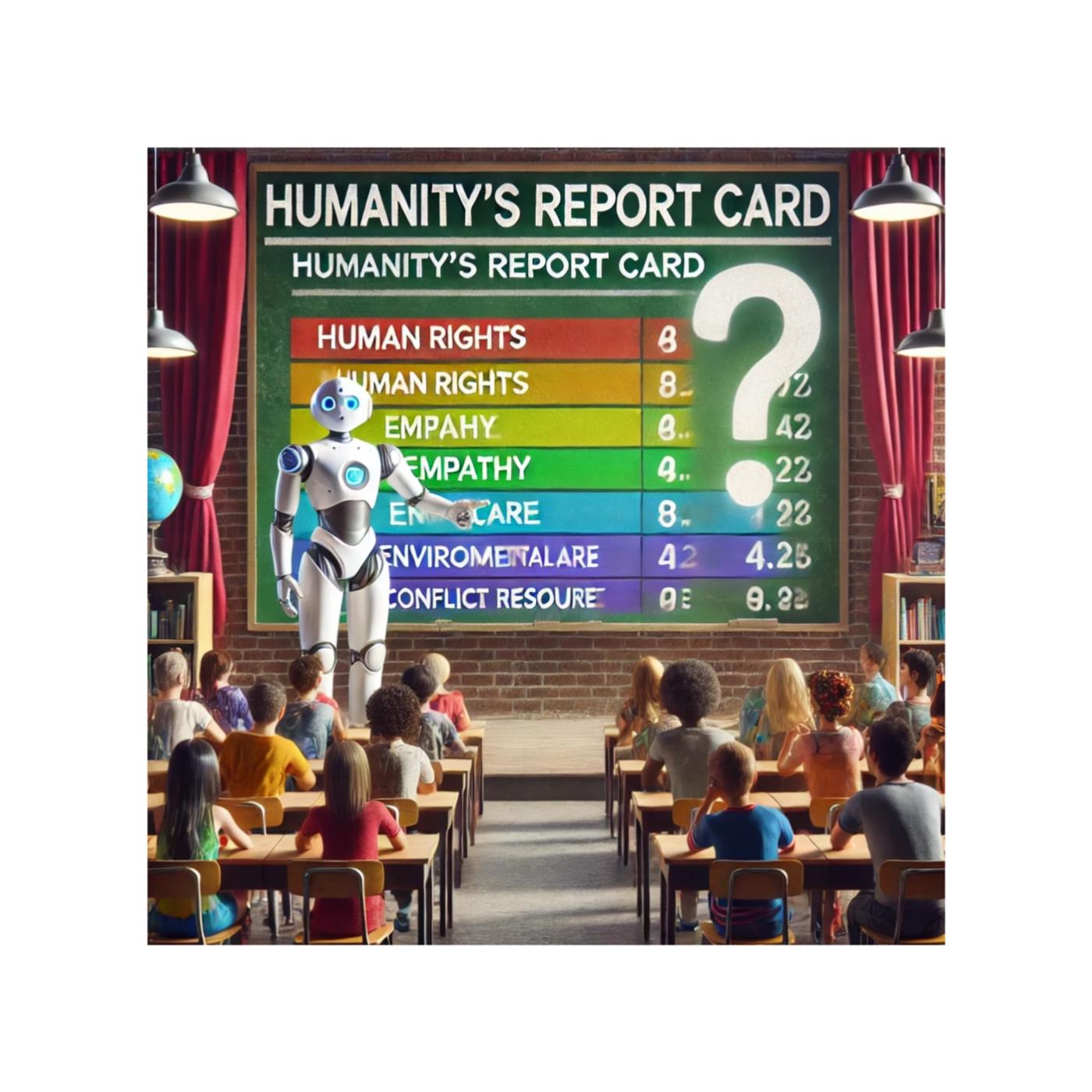
• Exploring the concept of an AI evaluating humanity’s compassion, fairness, and kindness.
• Presenting a performance evaluation highlighting triumphs and areas for improvement.
Performance Evaluation:
1. Scale of 1-10:
• Score: 5/10
• Explanation: Moderate performance with advancements in human rights and technology but needing improvement in conflict resolution, inequality, and environmental sustainability.
2. Equivalent Letter Grade:
• Grade: D (potential for improvement to C- or C)
• Explanation: A score of 50% translates to a D, indicating progress but significant room for improvement.
Positive Aspects:
1. Advancements in Human Rights:
• Recognition and upholding of human rights globally.
• Efforts to address discrimination and promote equality.
2. Humanitarian Efforts:
• Large-scale initiatives providing aid and relief.
• Community-driven projects improving living conditions for the disadvantaged.
3. Technological and Medical Advancements:
• Innovations improving quality of life and extending lifespans.
• Development of better healthcare, communication, and information access technologies.
Negative Aspects:
1. Conflicts and Violence:
• Ongoing wars causing harm and displacement.
• High levels of violence and crime.
2. Inequality:
• Persistent social, economic, and racial inequalities.
• Unequal access to resources and necessities.
3. Environmental Neglect:
• Inadequate address of environmental issues.
• Unsustainable practices contributing to climate change and biodiversity loss.
Path to Improvement:
1. Enhancing Empathy:
• Promote empathy and understanding across cultures.
• Foster community engagement and social cohesion.
2. Promoting Equality:
• Implement stronger actions to reduce inequalities.
• Support policies aimed at uplifting marginalized communities.
3. Sustainable Practices:
• Commit to sustainable environmental practices.
• Encourage adoption of green technologies and renewable energy.
4. Conflict Resolution:
• Work towards peaceful resolutions and global cooperation.
• Support international efforts to mediate disputes.
Teaching Customs and Humane Practices:
1. Public Dancing Restrictions:
• Respecting cultural customs where public dancing is forbidden.
2. Historical Conflicts Over Beliefs:
• Understanding historical conflicts driven by differing religious beliefs (e.g., Crusades, Thirty Years’ War, French Wars of Religion).
3. Modern Reflections:
• Recognizing ongoing tensions in the Middle East influenced by religious and cultural beliefs.
Embracing Neurodiversity:
• Promoting environments accommodating diverse perspectives.
• Developing technologies like AI Pins to help neurodiverse individuals navigate social situations.
Conclusion:
• Humanity’s journey towards being humane is ongoing.
• Addressing areas for improvement and fostering empathy can lead to a more equitable and compassionate world.
• Championing safe spaces, investing in helpful technologies, and embracing diversity and humane practices are crucial steps forward.
• Stay odd, stay strong, and strive for a more humane future.
• Until next time,
• Oddly Robbie
Human Systems with Oddly Robbie
An ordinary moment can reveal a much bigger story.
From my home in Mediterranean Spain, I explore how global systems meet everyday life—and how culture gives those encounters meaning.
A café conversation, a university classroom, a neighbourhood tradition, or a frustrating piece of paperwork can open a question: why does this work the way it does? What shaped it? And why might it feel perfectly natural to one person and puzzling to another?
I’m Robbie Ellestad, also known as Oddly Robbie. After living in 22 places around the world in three years, I’m staying long enough to look more closely.
Human Systems connects personal experience with wider patterns in technology, history, economics, and human behaviour. I follow the connections, question my assumptions, and look for those “ah, now I see it” moments that change how we understand something familiar.
Rooted in life here. Curious about what connects it to everywhere else.
(Oddly Robbie is just something I do for fun. I don’t accept donations, sponsorships, paid promotions, or other compensation. It’s a hobby, not a business.)